
Times have changed, situations have changed, but the basic nature of superpower geo-politics remains the same and so also India's diplomacy -- call it non-alignment, strategic autonomy or neutrality; it all depends on the time scale, notes Rup Narayan Das.

The CBI has significantly increased the rate of fugitive repatriation, bringing back 134 individuals in the last five years, doubling the number from the previous decade. This success is attributed to enhanced diplomatic efforts, technological advancements, and improved coordination with Interpol.

The final NRC, a list of Indian citizens residing in Assam, was released in 2019 by excluding 19,06,657 people. However, it has not been notified by the Registrar General of India, leaving the controversial document without any official validity.
India has lodged a "solemn protest" with China over the establishment of two new counties in the Hotan prefecture, as parts of these regions fall within India's union territory of Ladakh. The Indian government asserted that the creation of these counties will not impact its sovereignty over the area and does not lend legitimacy to China's "illegal and forcible" occupation.
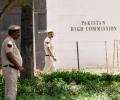
Pakistan is holding a high-level security meeting to formulate a response to India's suspension of the Indus Water Treaty and downgrading of diplomatic ties. The meeting, convened by Prime Minister Shehbaz Sharif, will include the National Security Committee, three services chiefs, and key ministers. The move comes after India blamed Pakistan for a terror attack in Pahalgam, which Pakistan has denied. Diplomatic observers warn that the escalation could further strain relations between the two countries.

India has lodged a strong protest with Pakistan over recent objectionable remarks made against Bhagat Singh, the government said in Lok Sabha. The Minister of State for External Affairs, Kirti Vardhan Singh, stated that India has been raising concerns about attacks on cultural heritage, growing intolerance, and lack of respect for minority communities in Pakistan. Singh also highlighted the strong ties between India and Bangladesh, emphasizing that their relationship is independent of Bangladesh's relations with other countries. The government closely monitors developments impacting India's national interests and takes necessary measures to protect them. Singh also provided information about the deportation of Indian nationals from the US, citing data from the US government.
'China could intentionally release excess water.' 'The North East is already flood-prone during the monsoon, and even a controlled release from Chinese dams (during the monsoon) could worsen flooding.'

External affairs ministry spokesperson Gopal Baglay, however, refused to comment whether there was reduction of Indian troops at the tri-junction between India-China-Bhuta.
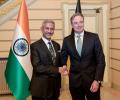
The era where nations thrived through rigid alignments is giving way to an age where the connective State defines power. For India, that era has arrived, points out Dr Nishakant Ojha.
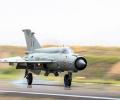
The MiG-21 episode demonstrates that procurement is always strategic.
Choices about what aircraft to acquire, who builds them, who supplies the spares, who trains the pilots and technicians are decisions with political consequences lasting for decades.

A new book reveals that India and Pakistan discussed a communal division of Jammu & Kashmir along the Chenab river before the Kargil war in 1999.
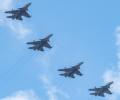
Pakistani military targets at Rafiqui, Murid, Chaklala, Rahim Yar Khan, Sukkur and Chunian were engaged using air-launched precision weapons from Indian fighter jets and the retaliation largely focused on command and control centres, radar sites and weapon storage areas, Qureshi said.
Amid escalating tensions between India and Pakistan, the US has said it will not get involved in the conflict, stressing that it is "fundamentally none of our business." While acknowledging concerns about a potential nuclear war, Vice President J D Vance emphasized that the US cannot control India and Pakistan, but can encourage them to de-escalate. The US has also reiterated its support for direct dialogue between the two countries and encouraged efforts to improve communications.
China has reiterated its plan to build the world's largest dam over the Brahmaputra River in Tibet, near the Indian border. The Chinese Foreign Ministry has assured that the project, estimated to cost around USD 137 billion, will not have any negative impact on downstream countries, India and Bangladesh. The ministry has stated that the project has undergone rigorous scientific verification and will be conducive to disaster prevention and mitigation, as well as climate change response. India has expressed concerns about the dam, raising the issue during talks with the visiting US National Security Advisor, Jake Sullivan. China has maintained that the project will not negatively affect the lower reaches and has committed to maintaining communication with downstream countries.
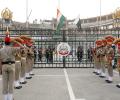
Pakistan's Foreign Office spokesperson Shafqat Ali Khan said on Friday that the ceasefire with India was holding and the country is committed to it. He also said that Pakistan is committed to making the ceasefire hold and de-escalation succeed, and then engagement to lead to stability and resolution of issues. Khan said that the two militaries have a channel of communication through the Directors General of Military Operations, through which they are working for de-escalation, in terms of the movement of troops. He added that Pakistan remains committed to the ceasefire announced on May 10 and lately, both sides have taken steps for de-escalation and return of stability.

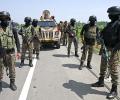
India needs to be technologically and militarily prepared to defend itself from both Pakistan and China, alerts Ramesh Menon.

Jadhav, a retired Indian Navy officer, was sentenced to death by a Pakistani military court on charges of espionage and terrorism in April 2017. Weeks later, India approached the ICJ against Pakistan for denial of consular access to Jadhav and to challenge the death sentence.

'Even known names and social media handles went berserk by stating that Karachi has been attacked and an F-16 was shot down.'
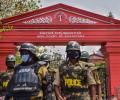
The Karnataka high court has granted an interim stay on criminal proceedings initiated against Bharatiya Janata Party leader Amit Malviya and Republic TV's Editor-in-Chief Arnab Goswami, in connection with allegations of spreading false claims that the Indian National Congress (INC) operates an office in Istanbul, Turkiye.

The Pakistan Army has vowed to respond to Indian air strikes that targeted locations in Pakistan-occupied Kashmir and Punjab. The strikes were carried out from within Indian airspace, according to the army spokesman, who said that Pakistan will respond at a time and place of its choosing. The army is currently assessing the damage caused by the strikes.
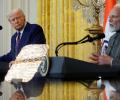
The deal fell through over unresolved disagreements over contentious issues, mainly on agriculture and automotive sector tariffs.

Admitting for the first time, a top United States diplomat has confirmed that there was 'shared intelligence among Five Eyes partners' that had prompted Canadian Prime Minister Justin Trudeau's offensive allegation about Indian agents' involvement in the killing of a Khalistani extremist on Canadian soil, according to a media report on Saturday.
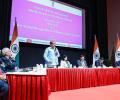
JD-U MP Sanjay Kumar Jha heads a diplomatic mission to Indonesia, Malaysia, South Korea, Japan and Singapore, to seek international cooperation after the Pahalgam attack while highlighting Pakistan's role in cross-border terrorism.

A third-year B-Tech student at Kalinga Institute of Industrial Technology (KIIT) in Bhubaneswar, India, died by suicide in her hostel. Police are investigating a possible case of blackmail by a male student, who is currently in custody. The incident sparked protests from Nepali students on campus, leading to heightened security measures and the temporary relocation of some students.

It is time for India to raise its voice not just through military prowess, but through professionalism, principled voting and partnerships, asserts Deepak Mishra.
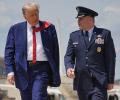
He then went on to say that, however, he won't get a Nobel Peace Prize for any of his efforts.
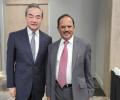
Doval is in Beijing for the 23rd round of the Special Representatives' talks being held after a gap of five years.

Modi, who visited Cyprus in the first leg of his three-nation visit, reiterated India's support for Cyprus's unity and for a peaceful resolution of the Cyprus Question based on UN Security Council resolutions, international law, and the EU Acquis.

'The fight against terrorism will continue. We have set a new normal and the new normal is that we will follow an offensive strategy. Wherever terrorists are, we have to kill those terrorists and we have to destroy their infrastructure. So it is still not over but as we speak the ceasefire is still intact'

"The current border situation is overall stable," the Chinese diplomat said.

Singapore's long-ruling People's Action Party (PAP), led by Prime Minister Lawrence Wong, has secured a landslide victory in the country's general election. The PAP won 87 of 97 seats, with voters endorsing the party's focus on stability and economic security amidst global uncertainties. Wong expressed gratitude for the strong mandate and vowed to tackle concerns about the cost of living and housing. The results mark a significant win for the PAP, which has been in power since Singapore's independence in 1965.
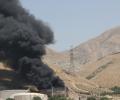
Asked about the expectations from the US, Azar said Washington and Israel are "completely in sync". He said he felt that the US would "support" Israel's action.

The Enforcement Directorate may also file a fresh chargesheet in this multi-crore money laundering case soon, they said.

'Trump is likely being purposefully vague, hoping that this lack of clarity will pressure India, fearing the worst, to agree to scale back its imports of Russian oil.'
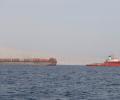
US strikes on Iran's three main nuclear facilities have once again raised concerns that Tehran might shut down the Strait of Hormuz - one of the world's most critical chokepoints, through which a fifth of global oil and gas supply flows.
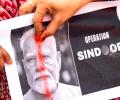
World leaders, including the UN Secretary-General and US President Donald Trump, have urged India and Pakistan to exercise restraint and seek peaceful solutions to the ongoing tensions. The calls for calm come after India conducted airstrikes in Pakistan-occupied Kashmir in response to a recent terrorist attack. Leaders from the US, Russia, UK, China, UAE, Qatar, and Japan have expressed concern over the escalating situation and emphasized the need for dialogue and de-escalation.

Similarly, Pakistan has shared the names of 43 civilian prisoners and 211 fishermen in its custody who are Indian or are believed-to-be-Indian, the MEA added.

It was for the first time that the high-level military talks on the lingering border row spanned two days.
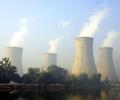
The two countries exchanged the list of nuclear installations and facilities covered under the agreement on the prohibition of attack against nuclear installations between India and Pakistan, the Ministry of External Affairs (MEA) said.
